“As America continues to make advances in space exploration and technology, it’s important for our astronauts and researchers to be able to collaborate with the private sector to bolster our competitive edge.”
WASHINGTON – Today, U.S. Senators John Cornyn, Andy Kim (D-NJ), Roger Wicker (R-MS), and Alex Padilla (D-CA) introduced legislation to drive space innovation in America through fostering collaboration between NASA and the commercial space industry. By creating the Public Private Talent Exchange Program (PPTE) within NASA, the bipartisan NASA Talent Exchange Program Act would create partnership opportunities that can further grow expertise across government.
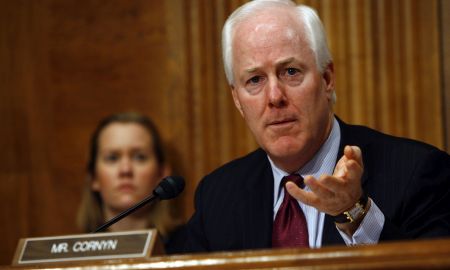 “As America continues to make advances in space exploration and technology, it’s important for our astronauts and researchers to be able to collaborate with the private sector to bolster our competitive edge,” said Senator Cornyn. “I’m proud to join my colleagues on this legislation to create a talent exchange program, which would help improve knowledge transfer and skill development for NASA’s missions.”
 “The era of looking to the stars to see the future has only just begun, and by continuing to drive American innovation we help make a bright future possible for our country. This initiative is an important tool to make sure we are unlocking the full potential of talent across government and the space industry who are leading the way with groundbreaking technologies and securing America’s place as the space leader globally,” said Senator Kim.
Said Senator Wicker, “Public-private partnerships are crucial for innovation and economic development. Allowing leaders from NASA and top companies to participate in a fellowship will improve modernization and ensure the United States’ space program remains the best in the world. We are engaged in a 21st century space race. Congress must provide resources to ensure the United States’ success."
“Collaboration between NASA and our growing aerospace industry is crucial to advance America’s space leadership and groundbreaking innovations,” said Senator Padilla.“As budget cuts and mass layoffs at NASA centers in California and across the country jeopardize scientific research, our bipartisan bill will strengthen our global competitiveness and improve cooperation with space science experts by establishing a public-private talent exchange program.”
Background:
The PPTE would be a professional development program focused on giving NASA and industry professionals an opportunity to gain exposure and experience in a variety of subject and skill areas. Specifically, it would assign NASA employees into industry posts, as well as place industry professionals into positions at NASA.
The exchanges would last between three months to two years with options to extend for an additional year. The PPTE is modeled after a similar initiative that the Department of Defense has operated since 2018 and that has allowed the Department of Defense to forge partnerships with private sector companies and swap business practices for the betterment of both parties.
The NASA Talent Exchange Program Act has previously been introduced in the House of Representatives and Senate. It was also previously included in the NASA reauthorization legislative proposal (NASA Reauthorization Act) to look after NASA’s success and help maintain American space leadership.
The full NASA authorization process has historically been a bipartisan effort considered every few years.
The PPTE would be a professional development program focused on giving NASA and industry professionals an opportunity to gain exposure and experience in a variety of subject and skill areas. Specifically, it would assign NASA employees into industry posts, as well as place industry professionals into positions at NASA.
The exchanges would last between three months to two years with options to extend for an additional year. The PPTE is modeled after a similar initiative that the Department of Defense has operated since 2018 and that has allowed the Department of Defense to forge partnerships with private sector companies and swap business practices for the betterment of both parties.
The NASA Talent Exchange Program Act has previously been introduced in the House of Representatives and Senate. It was also previously included in the NASA reauthorization legislative proposal (NASA Reauthorization Act) to look after NASA’s success and help maintain American space leadership.
The full NASA authorization process has historically been a bipartisan effort considered every few years.
- Read the full text of the NASA Talent Exchange Program Act here.