By Tayte Christensen
Imagine needing credit to cover an emergency expense only to discover that Washington’s promise to make borrowing cheaper has made it nearly impossible to borrow at all.
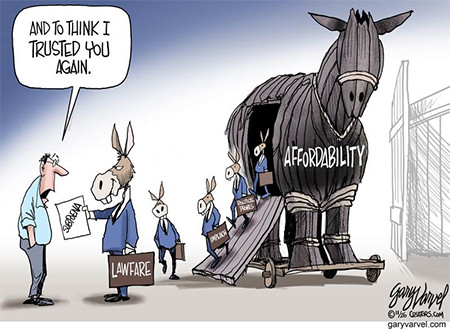
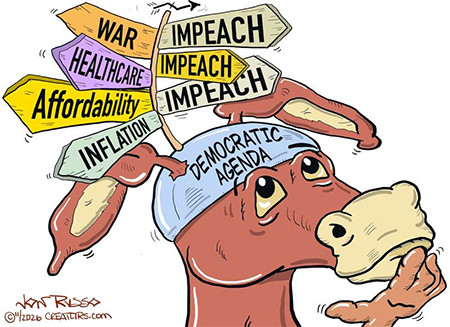
That’s the risk of the 10 percent credit-card interest-rate cap backed by Sen. Elizabeth Warren (D-MA), who is expected to take over the Senate Banking Committee in January. And while the policy promises to provide the affordability Democrats are committed to, Warren’s approach could leave Americans with fewer borrowing options.
Current Chairman Sen. Tim Scott (R-SC) warned Warren’s proposed cap could hurt the borrowers it intends to help by making previously eligible applicants unable to obtain credit.
“One of the things I have tried to defend against is this notion that some kind of 10 percent rate cap is good for the American people,” Scott said. “Well, it sounds good, but if you don’t have a 720 credit score, you have no access to credit in the United States of America as a result of a 10 percent rate cap. So we have to tell the whole story.”
But the rate cap proposal is just one part of Warren’s push to reshape the financial industry through tighter restrictions on private equity and increased scrutiny of financial firms. Now, with Democrats’ big win this midterm cycle, Warren is mandating the party pursue that agenda.
“Democrats won by recognizing Americans’ economic pain, denouncing Washington corruption that has made a rigged economy worse by favoring giant corporations over working people, and by pledging to upend this system,” Warren wrote. “Americans need Democrats to deliver now.”
 But Warren’s promises of economic relief leave out the actual consequences of her agenda, which would give Washington more control over lending and private investment. Scott, who has spent the last two years working alongside her, said he expects a “strong battle” over the direction she wants to take the committee.
“She didn’t surprise me, but she is absolutely aggressive, she is tenacious, and she is clearly focused on what she believes is in the best interests of the country,” Scott told CNBC of his time working with Warren. “I just consistently, 95 to 97 percent of the time, vehemently disagree with her. That’s where I think we’re going to have a strong battle on the banking committee.”
Scott said Republicans would work to keep Democrats “from going off the rails,” pointing to the prospect of overly aggressive oversight among his concerns.
Warren’s stance on the cryptocurrency industry, for starters, paints a picture of the upcoming battles.
Warren, a longtime crypto critic, said she intends to investigate President Trump’s dealings with the industry. But beyond Trump, Warren has questioned whether the technology has benefited the economy as a whole, recently telling The New York Times she’s “still waiting for crypto to make that case.”
“They’ve had 18 years now to show the positive use case for crypto and it’s hard to see where that is,” Warren said.
But Sen. Cynthia Lummis (R-WY) was quick to challenge Warren on the issue, noting that digital assets can reduce the cost of moving money. Some crypto allows “employers to pay their employees nearly instantly,” she wrote.
“For someone who claims to champion affordability and hates junk fees, she sure loves protecting them,” Lummis wrote of Warren. “Ultimately, digital assets have made a clear case, but she just keeps voting against them and the rules of the road she claims she wants, because she actually wants to kill crypto.”
Warren’s private-equity agenda raises a similar concern about how much control Washington should be able to exercise over private investment.
Warren is calling for expanded liability for controlling private-equity firms through her Stop Wall Street Looting Act. The proposal, also backed by Sen. Bernie Sanders (I-VT), would make those firms and certain insiders responsible for obligations of companies they own, including debt and legal liabilities.
For Warren, the bill stands to serve as accountability for big companies. But adding those debts and liabilities could discourage investments in struggling businesses, and would ultimately “increase taxes, stifle private investment, eliminate jobs, and threaten the life savings of Americans across the country,” according to a 2021 letter written to Warren from a group of conservative and free-market organizations addressing an earlier version of the bill.
“As we have seen time and time again throughout history, when you tax and overregulate an activity, you get less of it,” the letter reads. “Unfortunately for workers and retirees across the country, the result of the Stop Wall Street Looting Act would hurt the livelihoods of the 11.7 million workers directly employed by private equity-backed companies.”
Warren promises to deliver for Americans frustrated with the economy. But restricting investment and making financial innovation harder could leave those same Americans with fewer opportunities. Republicans are tasked with the challenge of preventing her promises of economic relief from becoming yet another source of financial hardship.
“We’re going to have a lot of fun on the Banking Committee,” Scott said.