Big League Politics
The conservative justice warns that political intimidation and court packing could destroy judicial independence for generations.
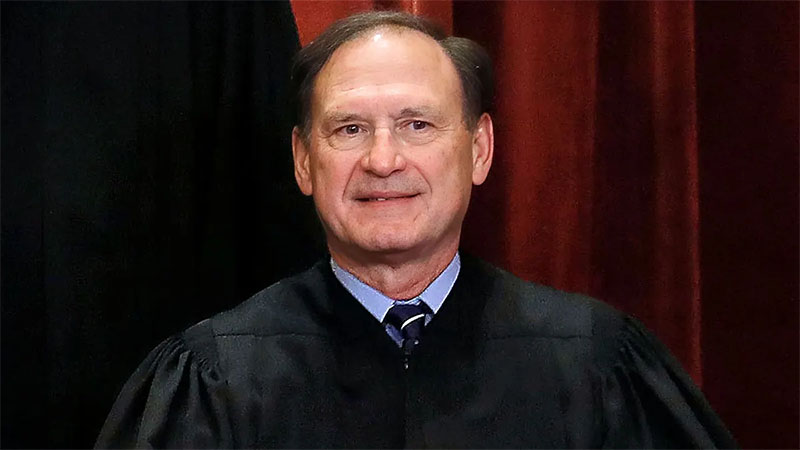
Supreme Court Justice Samuel Alito is sounding the alarm over growing efforts to reshape the nation’s highest court, warning that political intimidation and proposals to expand its membership could fundamentally transform the judiciary for generations. The conservative justice delivered the warning while accepting the American Enterprise Institute’s Irving Kristol Award during the organization’s annual dinner at the National Building Museum in Washington, D.C.
His remarks come as Democrats prepare to take control of both chambers of Congress in January following the 2026 midterm elections, raising fresh concerns about the future of the Supreme Court and its conservative majority.
Alito warned that the Court could soon face a defining battle over its ability to operate independently of political pressure.
“But it now appears that the Court may soon face a structural question of far greater magnitude: whether it will be allowed to continue as an independent tribunal that decides cases based on its understanding of the law, not political pressure,” Alito declared.
The longtime conservative justice went further, describing what he characterized as an escalating campaign to intimidate members of the Court and undermine public confidence in the institution.
“What we have seen in recent years is a mounting campaign to change the direction of the Court’s decisions by intimidating justices or, if that fails, by seriously damaging the Court’s standing in the eyes of the public and then altering the Court’s composition,” Alito stated.
“If that campaign succeeds, the Supreme Court as an institution will be fundamentally changed for many years—and perhaps permanently.”
The warning comes amid longstanding efforts by prominent Democrats to expand the Supreme Court beyond its current nine members, a move that could dramatically alter its ideological balance.
Massachusetts Democrat Senator Ed Markey has championed the Judiciary Act, legislation that would increase the number of Supreme Court justices from nine to thirteen.
The proposal would create four additional seats, potentially allowing a future Democrat president to appoint enough liberal justices to overturn the Court’s existing conservative majority.
Markey has previously defended the proposal by claiming that Supreme Court seats were “stolen” from Democrats, echoing complaints over Republican appointments during President Donald Trump’s first administration.
Rhode Island Democrat Senator Sheldon Whitehouse has also been a prominent critic of the conservative majority.
In a 2019 legal brief, Whitehouse and several other Senate Democrats warned that the Supreme Court “is not well” and suggested that the institution could face demands to be “restructured in order to reduce the influence of politics.”
Whitehouse has additionally supported changes involving judicial ethics, term limits, and congressional oversight.
While supporters portray these measures as necessary reforms, opponents argue that expanding the Court in response to unfavorable rulings would threaten judicial independence by allowing political majorities to reshape the judiciary whenever they disagree with its decisions.
Alito’s remarks underscore those concerns.
The justice emphasized that the judiciary occupies a uniquely vulnerable position within the federal government because it lacks the independent enforcement and financial powers possessed by the executive and legislative branches.
Unlike Congress, which controls federal spending, or the presidency, which commands the executive branch, the Supreme Court depends heavily on the other branches to respect its constitutional role.
Alito warned that public support could ultimately determine whether the judiciary remains independent.
“And because presidents and members of Congress are elected, what may matter most in the end is popular support for an independent judiciary,” he explained.
The Supreme Court has maintained nine justices since 1869, although Congress changed its size several times during the nation’s earlier history.
The Constitution does not establish a fixed number of Supreme Court justices, leaving Congress with the authority to determine its membership through legislation.
That authority has become a central issue in the ongoing debate over court expansion.
Although Democrats have introduced legislation to increase the Court’s size, no such proposal has become law, and the incoming congressional majorities alone would not be sufficient to enact court expansion over presidential opposition without the votes needed to overcome a veto.
Nevertheless, the possibility of Democrats capturing the White House in 2028 has renewed attention on whether a future administration could pursue sweeping changes to the judiciary.
For Alito, the issue extends beyond the political composition of any particular Supreme Court.
His warning raises a fundamental question about whether the nation’s highest court can continue interpreting the Constitution independently or whether political pressure will ultimately determine its future.
With Democrats preparing to wield greater power in Washington and another presidential election approaching, the battle over the Supreme Court’s independence could become one of the defining constitutional fights of the coming years.