Taxpayers Shouldn’t be Forced to Fund Lobbyists
- by:
- 2026-04-10
- Source:
texasinsider

- 04/10/2026
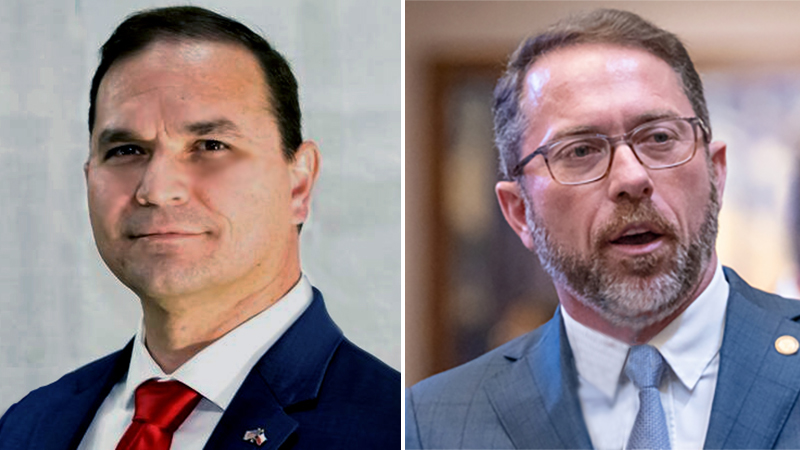
TX State Senator Adam Hinojosa & FL Rep. Jason Shoaf by is licensed under
By TX State Senator Adam Hinojosa & FL Rep. Jason Shoaf
In every healthy democracy, citizens should have the freedom to decide which causes and organizations deserve their support. Individuals can choose whether to join associations, donate to advocacy groups or hire lobbyists to represent their views.
However, when taxpayer dollars are used by local governments to hire lobbyists, that freedom disappears. Taxpayers are forced to bankroll political advocacy, whether they agree with it or not.
That’s why we each introduced the No Taxpayer Money for Lobbying by Political Subdivisions Act in our respective states.
In Florida, the legislation simply says public money cannot be used to hire professional lobbyists or fund associations that lobby state legislatures on behalf of local governments. It is a common-sense reform rooted in transparency, accountability, and respect for taxpayers.
In Texas, although the bill ultimately did not pass, the effort made one thing clear: Our citizens are paying attention, and the demand for reform is not going away. This is not the end of the conversation — we will continue pushing to ensure taxpayer dollars are used to serve the public, not to lobby against it.
At its core, the issue is one of choice.
Taxpayers do not voluntarily send their money to government — taxes are compulsory. When those funds are then used to influence legislation, citizens are effectively compelled to support political activity they may oppose.
This raises a basic free speech concern: Compelled speech is fundamentally different from voluntary political participation. Individuals should never be forced to subsidize advocacy that runs counter to their beliefs or interests.
This legislation does not silence local officials in any way. In fact, it explicitly protects their ability to communicate with lawmakers. Mayors, county commissioners, school board members and their staff can still call legislators, write letters, testify before committees and travel to the capitol to advocate for their communities — precisely as our founders intended.
The bill merely restricts the use of taxpayer money to hire third-party lobbyists whose full-time job is political persuasion.
There’s an important distinction here.
Elected officials speaking directly to lawmakers is representative government in action. A contract lobbyist funded by taxpayers is something different entirely. When a political subdivision uses tax dollars to hire professional advocates, it inserts an additional layer between the people and their representatives — one that may not reflect the priorities of residents at all.
In some states, taxpayer funded lobbying has even worked against the interests of the citizens who are paying the bills.
In Texas, we have seen taxpayer funded lobbyists oppose tax relief while supporting increases in sales taxes, gas taxes and vehicle registration fees.That raises a simple question: Why should our constituents be required to fund advocacy that works against their own financial interests?
In the private sector, if you do not agree with how a business operates, you can take your business elsewhere. But when it comes to taxpayer funded lobbying, there is no such option. You cannot simply opt out. You are required to continue funding a political subdivision that may be paying a lobbyist to advocate against your own values, and refusing to pay is not a realistic or lawful choice.
When communication is direct, accountability follows. Citizens can clearly see who is making the case, whose interests are being represented and how decisions are ultimately shaped. The No Taxpayer Money for Lobbying by Political Subdivisions Act, along with proposed bans on taxpayer funded lobbying, reinforces that principle.
It does not prevent local governments from working together, and it does not stop associations from sharing information or tracking legislation. It simply sets a reasonable boundary that taxpayer dollars should be used for essential public services, not for professional political advocacy.
At its core, this is about fairness. Americans should always have the freedom to support causes and organizations they believe in, but that support should come from their own choice, not through mandatory tax dollars. This legislation reaffirms a basic principle: The government exists to serve the people, not to lobby them.
By passing it, we take a meaningful step toward restoring trust, protecting taxpayers, and ensuring that advocacy remains transparent, voluntary, and accountable to the people it represents.
Adam Hinojosa is a Republican member of the Texas Senate. Jason Shoaf is a Republican member of the Florida House of Representatives.
TX State Senator Adam Hinojosa & FL Rep. Jason Shoaf by is licensed under