BARONE: The California Dream Ends in Empty Reservoirs & Homeless Tents
- by:
- 2026-05-29
- Source:
texasinsider

- 05/29/2026
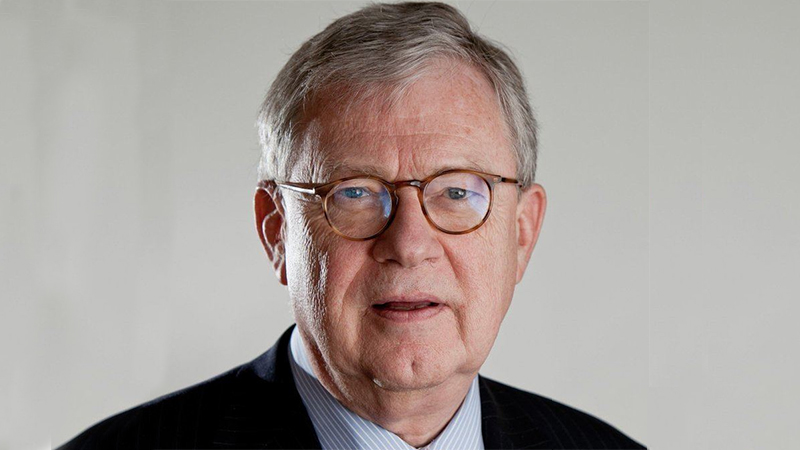
Columnist Michael Barone by is licensed under
By Michael Barone
Many years ago, sometime after Ronald Reagan replaced Pat Brown as governor of California, I was driving up the coast from Los Angeles to San Francisco and visited Hearst Castle, William Randolph Hearst's epic mansion in San Simeon. It was state property then, donated by the Hearst family, and the uniformed guide struck me as knowledgeable, competent and proud of her work.
Some time later, I wrote articles arguing that California, not yet the highest-tax state but never a tax haven either, was proof that big government could provide competent services.
For a generation, under Govs. Earl Warren, Goodwin Knight, Pat Brown and Ronald Reagan, the California state government built thousands of miles of freeway, first-rate state universities and a whole archipelago of community colleges, and had begun to reduce smog in the L.A. basin.
No one would write such an article about California today, except maybe in a humor magazine.
The public sector that helped make California the nation's most populous state in 1963 is today producing a dystopia that has tens of thousands more people leaving than arriving in the once promised land of California every year.
Even as California-based tech companies have reached a market capitalization of $1 trillion, its state and local governments have sunk to levels of incompetence associated with underdeveloped countries.
California today "has the nation's highest cost-of-living adjusted poverty rate, the highest levels of functioning illiteracy, and the worst housing affordability in the continental US," writes Joel Kotkin, who has been chronicling California's highs and lows for more than 40 years.
"California increasingly resembles a neo-feudal state, where a handful of large companies drive the economy while the vast majority of workers endure high energy and housing costs, high taxes, and diminishing opportunity."
The Golden State government has spawned fiascos large and small. Fraudulent Medicaid spending, which made headlines in Minnesota last winter, seems likely to be even more monumental in California, whose Medicaid programs are scheduled to get $138 billion from the federal government, up $18 billion from 2024.
The state subsidizes tribal ceremonies and exorcisms, gym memberships and art lessons.
Then there's the state's 911 program, which cost Californians $450 million between 2019 and 2025, according to The Sacramento Bee's William Melhado. When tiny Tuolumne County implemented the new system, dispatchers received misrouted calls from other counties, emergency calls were lost, and there was a 12-hour period when callers were unable to call 911.
All of which makes it kind of odd that the national Democratic Party, increasingly dominated by a presumably sophisticated bloc of voters, those with college and graduate degrees, currently prefers California-based politicians like former Vice President Kamala Harris and Gov. Gavin Newsom (D-Calif.) for its presidential nomination in 2028.
They might have second thoughts, or so one would hope, if they reflected on the state of California's biggest public works project, a high-speed railroad that backers say will someday connect its two largest metropolitan areas.
By a narrow 53%-to-47% margin, the project was approved by voters in 2008, when the total cost was estimated at $33 billion, even though about 130 daily flights connected the five major airports in the LA basin with the three major airports in the San Francisco Bay Area.
Today, after nearly 18 years, something like $13 billion has been spent, but no trains are running, and construction is currently limited to 171 miles of flat Central Valley farmland between Bakersfield and Merced, whose combined demand for passenger rail service is close to zero.
Cost estimates range far upward of $33 billion, to $126 billion or maybe $231 billion, and the completion date is estimated for the 2040s, when most of its 2008 voters will be dead.
Back in 2011, high-speed rail officials sought advice from SNCF, the French rail operator. But the firm withdrew from California in favor of "less politically dysfunctional" Morocco, where it helped complete a high-speed system in seven years.
California, in its golden years, made the movie "Casablanca." Today, Casablanca is better at building public works than California. The state that, within six months, completed two major bridges across the San Francisco Bay can't properly route phone calls in Tuolumne County.
Taking a workable system and making it fail requires a particular talent. Reading between the lines, one sees little among California's well-paid public-sector union ranks of the pride I once noticed in a state employee years ago.
Instead, there is an eagerness to extract still more from the- SEIU is pushing a supposedly one-time wealth tax on the very rich to boost current employees benefits, and a complacent indifference boost current employees' benefits — and a complacent indifference to whether the work actually serves its intended beneficiaries.
Will the politicians astride this rot pay a price?
Harris was the Democratic nominee for president in 2024, and Newsom leads in polls for the nomination in 2028. But a countertrend may be visible in the theoretically nonpartisan June 2 primary for mayor of LA.
The (sparse) polling shows LA Mayor Karen Bass way below the 50% needed to win reelection next week, and former reality TV star Spencer Pratt overtaking the left-wing council member initially expected to be her chief challenger.
Pratt's house was burned down in the January 2025 Pacific Palisades fire, which struck as Bass (despite promising in 2002 to take no foreign trips) was headed to the inauguration of the president of Ghana. Pratt's cheeky ads lampoon Bass's left-wing policies, which have produced empty reservoirs and streets full of angry, drug-addicted homeless people.
Empty reservoirs and acres of homeless tents — that's what California's once-proud public sector has been producing.
Michael Barone is a senior political analyst for the Washington Examiner, resident fellow at the American Enterprise Institute and longtime co-author of The Almanac of American Politics. His new book, "Mental Maps of the Founders: How Geographic Imagination Guided America's.
Revolutionary Leaders," is now available.
Columnist Michael Barone by is licensed under