Here's two states worth of evidence for what works – and the Texas Legislature convenes in January 2027
By Lauren Zelt
Texas Insider Report: WASHINGTON, D.C. — In February, a Texas woman named Emily Sutton picked up her phone and found herself talking to an AI-generated voice. It asked her a series of questions about injuries she might have suffered, and kept asking after she said the questions didn't apply to her. When she asked who was calling, the voice named a Michigan personal injury operation, DV Injury Law, and read off its address.
Sutton had never contacted the firm, never requested a callback, and never given anyone her number.
According to the federal class action she has now filed in the Western District of Texas, the call was one of 1,000s placed by an automated platform working off a purchased lead list, with no attempt to confirm the numbers dialed belonged to anyone who wanted to hear from a lawyer.
 The caller ID, the complaint says, concealed who was actually calling.
Multiply that call by however many 1,000s of others the platform placed, and you have the intake end of the modern mass lawsuit business: a machine that can manufacture plaintiffs.
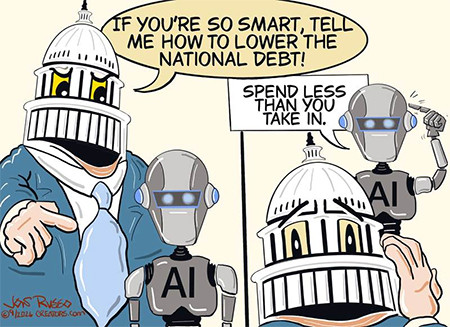
The debate over AI's growing footprint in American life usually centers on data centers and power grids. It should also center on the personal injury lawyer using an AI voice to cold-call strangers about injuries they don't have.
Texas is already feeling the other side of this, too. Cases are simply piling up.
Filings in the state's 15 Intermediate Appeals Courts are up 23% this year – more than 1,500 additional cases in nine months, and Houston's own 1st and 14th Courts of Appeals saw a 28% jump.
A veteran Texas appellate lawyer offered a plausible explanation in the news article: a good share of the increase is likely coming from lawyers with little appellate experience who are willing to take on a case for a modest fee because they plan to let AI write the brief.
AI is not the villain in this.
Filings in the state's 15 Intermediate Appeals Courts are up 23% this year – more than 1,500 additional cases in nine months, and Houston's own 1st and 14th Courts of Appeals saw a 28% jump.
A veteran Texas appellate lawyer offered a plausible explanation in the news article: a good share of the increase is likely coming from lawyers with little appellate experience who are willing to take on a case for a modest fee because they plan to let AI write the brief.
AI is not the villain in this.
The villain is a familiar one in the personal injury business: the lawyer willing to manufacture a claim out of someone who was never hurt, or sign a filing he never bothered to read, because the check goes out the door faster that way. AI didn't create that lawyer. It just gave him a cheaper way to work and a new excuse to reach for when he gets caught.
Start with Morgan & Morgan, the country's largest personal injury firm – which built its own in-house AI research tool.
In a Wyoming lawsuit against Walmart, the firm's lawyers filed a motion citing nine cases. Eight did not exist.
The judge found the fabricated citations were formatted strangely enough that any lawyer who had actually opened the underlying cases would have noticed. Nobody had.
 Morgan & Morgan is not an outlier.
The judge found the fabricated citations were formatted strangely enough that any lawyer who had actually opened the underlying cases would have noticed. Nobody had.
Morgan & Morgan is not an outlier.In Pennsylvania, a plaintiffs' attorney was fined and suspended from federal practice for six months this summer after AI-hallucinated citations surfaced in his filings in a products liability case, a lawsuit over a batting-cage safety net that failed and cost a Pennsylvania coach the sight in one eye.
In California, an appellate court upheld sanctions against Lipeles Law Group, a personal injury firm, after it filed a brief with fabricated AI citations in an unrelated wage-and-hour case, in a ruling that called it one of the worst examples of attorney misconduct the trial judge had seen on the bench.
Strip away the AI headline, and this is a familiar Texas story.
Personal injury lawyers have spent years perfecting ways to extract the largest possible settlement or verdict a case can be made to yield, regardless of what it is worth, from anchoring jurors with an arbitrary dollar figure to inflating the medical bills a jury is allowed to see.
And, Texas has paid for it: the state led the nation in nuclear verdicts, jury awards of $10 million or more, from 2009 through 2023, and led every state again with 23 such verdicts in 2024 alone.
And, Texas has paid for it: the state led the nation in nuclear verdicts, jury awards of $10 million or more, from 2009 through 2023, and led every state again with 23 such verdicts in 2024 alone.
AI-hallucinated citations and AI-generated robocalls are not a new scheme. They are the latest tool in an old one.
Texas lawmakers came close to addressing part of this runaway scheme last year. There was legislation that would have cracked down on the lawsuits that raise insurance rates for every law-abiding citizen.
Unfortunately, the Texas House killed the bill – but other states have already shown what happens when lawmakers act instead.
- Florida passed a sweeping litigation reform package in 2023. An independent economic analysis now credits it with a 14.5 percent reduction in property and casualty insurance costs compared to where rates would otherwise be, and insurers have returned more than a billion dollars in refunds to policyholders as a result.
- Georgia followed with its own reform in 2025, limiting how inflated medical bills can be shown to juries; insurers there have begun cutting rates. Texas, meanwhile, still leads the country in nuclear verdicts.
Cracking down on AI-hallucinated court filings and AI-driven robocall solicitation is a start, but it treats a symptom. The larger disease is a personal injury system that rewards manufacturing the largest possible claim over proving the truest one, whether the tool is an AI platform, a cooperating medical provider, or a well-rehearsed number read to a jury.
Texas consumers are the ones who pay for it, in insurance premiums and in the cost of everything insurance touches.
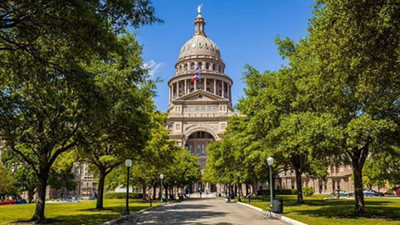
Policymakers who want costs to come down have two states worth of evidence for what works, and a legislature that convenes again in January 2027 to decide whether to use it.
 Lauren Zelt is the Executive Director of Protecting American Consumers Together (PACT), a national non-profit dedicated to investigating, educating, and advocating for reforming America's predatory personal injury system. PACT has run public education campaigns in more than a dozen states, including Texas in 2025. Learn more about PACT by visiting https://protectingamericanconsumers.org/